.png) Get Started
Get Started
Growth can look healthy on the surface while retention worsens underneath. The Discord server is active. New signups keep landing. Support volume climbs every week. But the same pattern keeps showing up in the backlog: new users ask basic setup questions, power users complain about repeat bugs, moderators spend too much time repeating answers, and people who looked highly engaged a month ago stop showing up.
That's the retention problem for community-driven companies. It rarely starts as a loyalty issue. It starts as an operational issue.
For SaaS teams, gaming studios, and Web3 communities, retention often breaks in messy channels like Discord, Slack, and Telegram long before it shows up in a cancellation dashboard. Customers don't leave because they forgot the product exists. They leave because they hit friction, didn't get to value fast enough, or lost trust that anyone could solve their issue without making them repeat themselves three times.
A lot of teams still treat retention like a downstream metric. Marketing acquires users, product ships features, support handles problems, and then someone checks churn at the end of the month. That model breaks fast in high-volume communities because churn usually starts inside everyday conversations.
Retention deserves executive attention because the economics are hard to ignore. Increasing customer retention by just 5% can raise profits by 25% to 95%, acquiring a new customer typically costs 5x more than keeping an existing one, and repeat buyers spend 67% more than first-time shoppers, according to Flowlu's roundup of customer retention statistics.
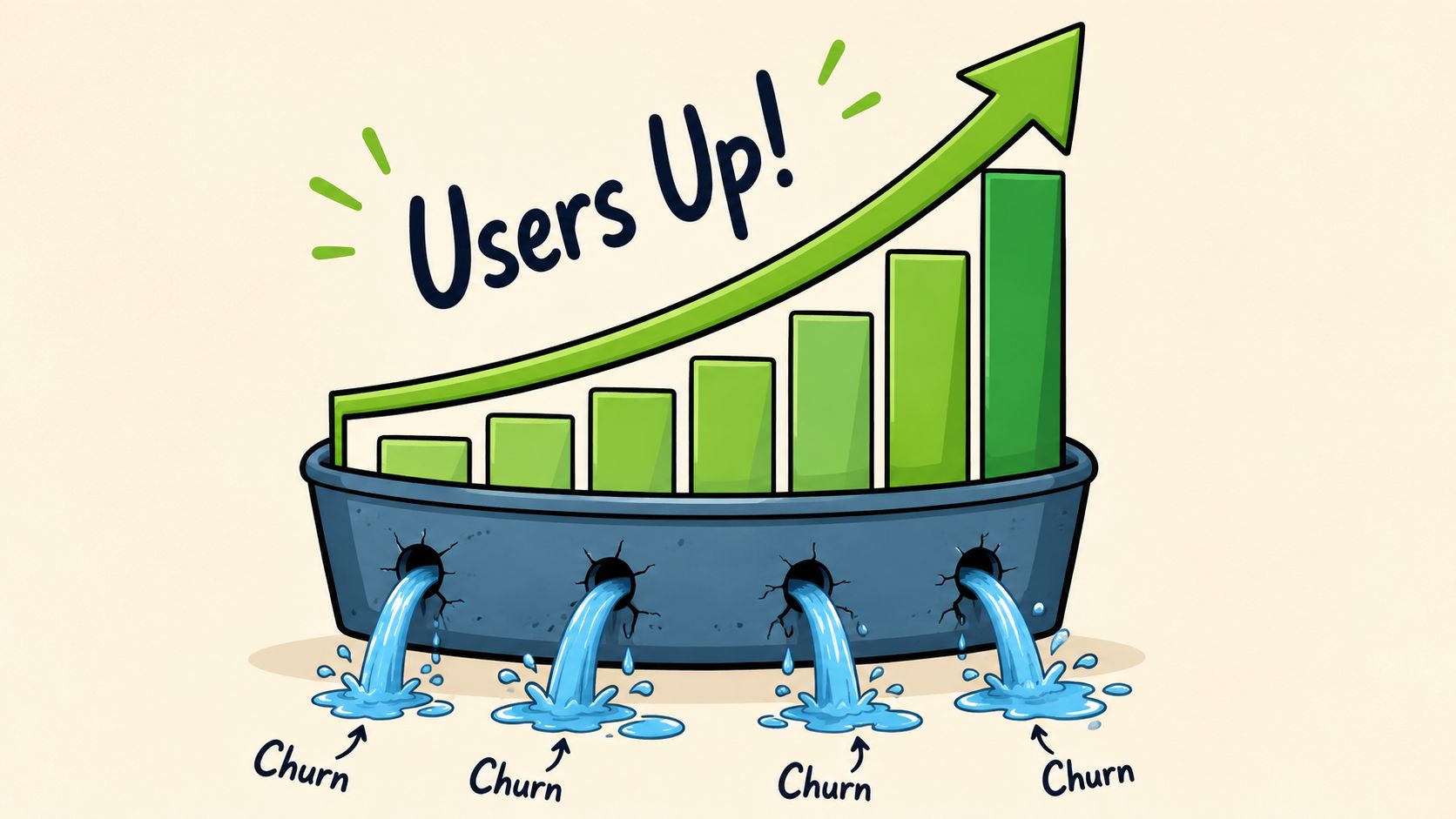
Those numbers change how teams should think about support and community work. Fast replies, clean onboarding, and fewer unresolved tickets aren't “nice to have” improvements. They directly affect revenue efficiency.
In community-led products, users often experience the company through support before they experience the full product. A user joins a Discord server, asks a setup question, waits too long, gets a partial answer, and leaves confused. That doesn't feel like a support miss. It feels like poor product value.
The opposite is also true. When a team resolves issues quickly, points users to the right documentation, and preserves context across channels, retention improves because the product feels easier to adopt and safer to rely on.
Practical rule: If a team wants to know how to improve customer retention, it should start by fixing the operational moments that make customers feel stuck.
That's why retention should sit next to metrics like response time, resolution quality, onboarding completion, and satisfaction. Teams that already track customer satisfaction score and other support metrics usually get a much clearer view of why customers stay, and why they don't.
Traditional churn analysis often misses early warning signs in conversational products. The user may still be in the server. They may still open the app. They may even still message support. But their behavior changes:
That's why customer retention is a hidden growth engine. It doesn't just protect revenue. It exposes where the customer experience is leaking value every day.
Organizations often begin with one company-wide retention number. That's useful for reporting, but it's weak for diagnosis. Aggregate retention can look stable while one user segment is failing badly.
The better approach is to find the exact point where customers stop progressing. In SaaS, that might be after setup but before activation. In a gaming community, it might be after the first wallet connection, first session, or first support issue. In a developer tool, it might be after docs usage spikes and implementation stalls.
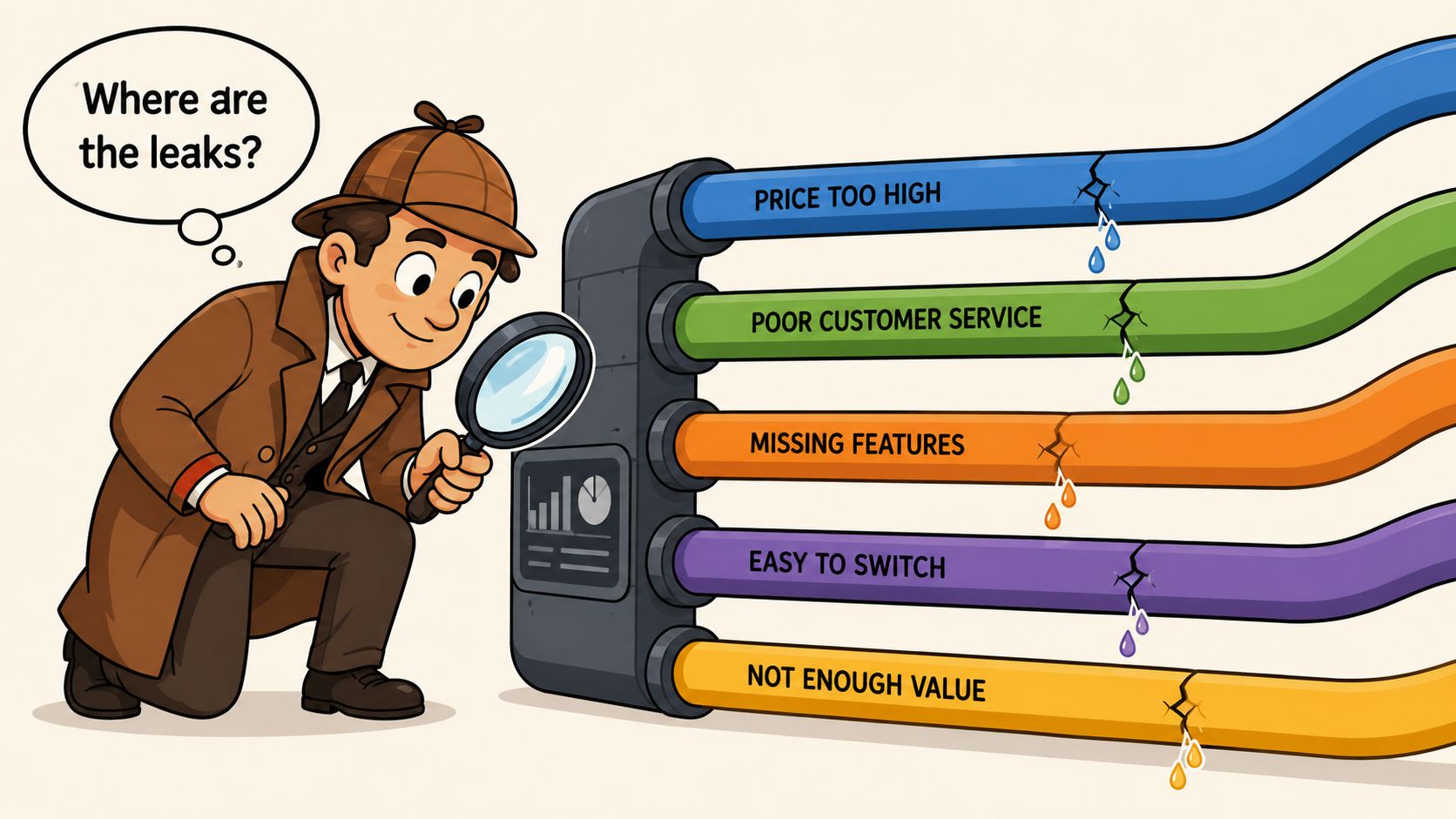
Behavioral segmentation is the practical starting point. Simon-Kucher recommends segmenting customers by behavioral risk, forecasting retention at acquisition, and applying churn-prevention measures to the highest-risk segments. In their work, this reduced customer attrition by 10–30% as explained in their retention strategy guidance.
That matters because churn is rarely random. It clusters around patterns that teams can observe:
A single churn percentage won't show any of that clearly.
A useful cohort isn't just “users who signed up in April.” For community-driven companies, stronger cohorts often look like this:
Teams usually find the retention leak faster when they segment by behavior first and account size second.
Community channels generate much noisier signals than traditional product analytics. That makes discipline more important, not less. The point isn't to collect everything. The point is to identify a short list of signals that regularly appear before churn.
Common warning signs include:
A team doesn't need perfect predictive modeling to act on these signals. It needs a repeatable workflow.
A practical weekly churn review should answer four questions:
Review questionWhat the team should inspectWhere did the user stallOnboarding, activation, support, expansion, renewalWhat behavior changed firstUsage decline, repeated questions, silence after friction, unresolved ticket patternWhich segment is affectedNew users, power users, high-touch accounts, community-only usersWhat action is mappedOutreach, education, escalation, product fix, documentation update
At this stage, many companies start learning how to improve customer retention in a way that changes operations. They stop asking “Why are customers churning?” in the abstract and start asking “Which users hit which friction, and what intervention fits that pattern?”
A lot of churn is locked in during the first stretch of the customer journey. Not because the product is bad, but because the user never reaches a clear win. In community-driven products, this is even more pronounced because onboarding often happens across multiple surfaces at once: the product itself, the help center, email, Discord, and a live support queue.
That creates confusion fast. The team thinks it has given users many ways to succeed. The user experiences five places to get lost.
Onboarding and service responsiveness are primary retention mechanisms. Segmented, role-based onboarding, self-guided walkthroughs, and proactive follow-ups are core levers that can help businesses achieve retention rates of 85-90% or higher, according to LearnExperts' customer success metrics guide.
The operational lesson is simple. Don't design onboarding as a tour. Design it as a sequence that gets each user type to one meaningful outcome quickly.
A SaaS product might define that outcome as connecting a data source, inviting teammates, or publishing the first workflow. A gaming or Web3 community might define it as wallet verification, first claim, joining the right role-gated channel, or completing the first supported action without needing moderator help.
Generic onboarding is easy to ship and hard to scale. It forces every user through the same path, even when their goals are different.
A stronger setup usually includes:
For Discord communities, this often means using onboarding bots, role selection, pinned getting-started flows, and tightly structured help channels. For SaaS products, it means checklists, contextual product tours, triggered emails, and a knowledge base that answers the first ten questions users ask.
A useful support foundation is a chatbot-backed knowledge base workflow that keeps documentation close to the questions users ask most often.
The first month should be reviewed like an operator reviews a funnel. Not every step matters equally. A few moments decide whether the user continues.
A strong onboarding audit usually checks:
Good onboarding removes decision fatigue. Great onboarding also removes avoidable support volume.
Most retention fixes that look advanced later are just delayed onboarding fixes. If users don't understand the product, don't trust the support path, or don't know what success looks like, re-engagement campaigns won't save them.
Community-driven companies hit a familiar wall. Growth brings more messages, more edge cases, and more public support threads. Then quality drops. Moderators answer the same questions all day, response times slip, and users start getting different answers depending on who was online.
That's usually where retention starts to erode.
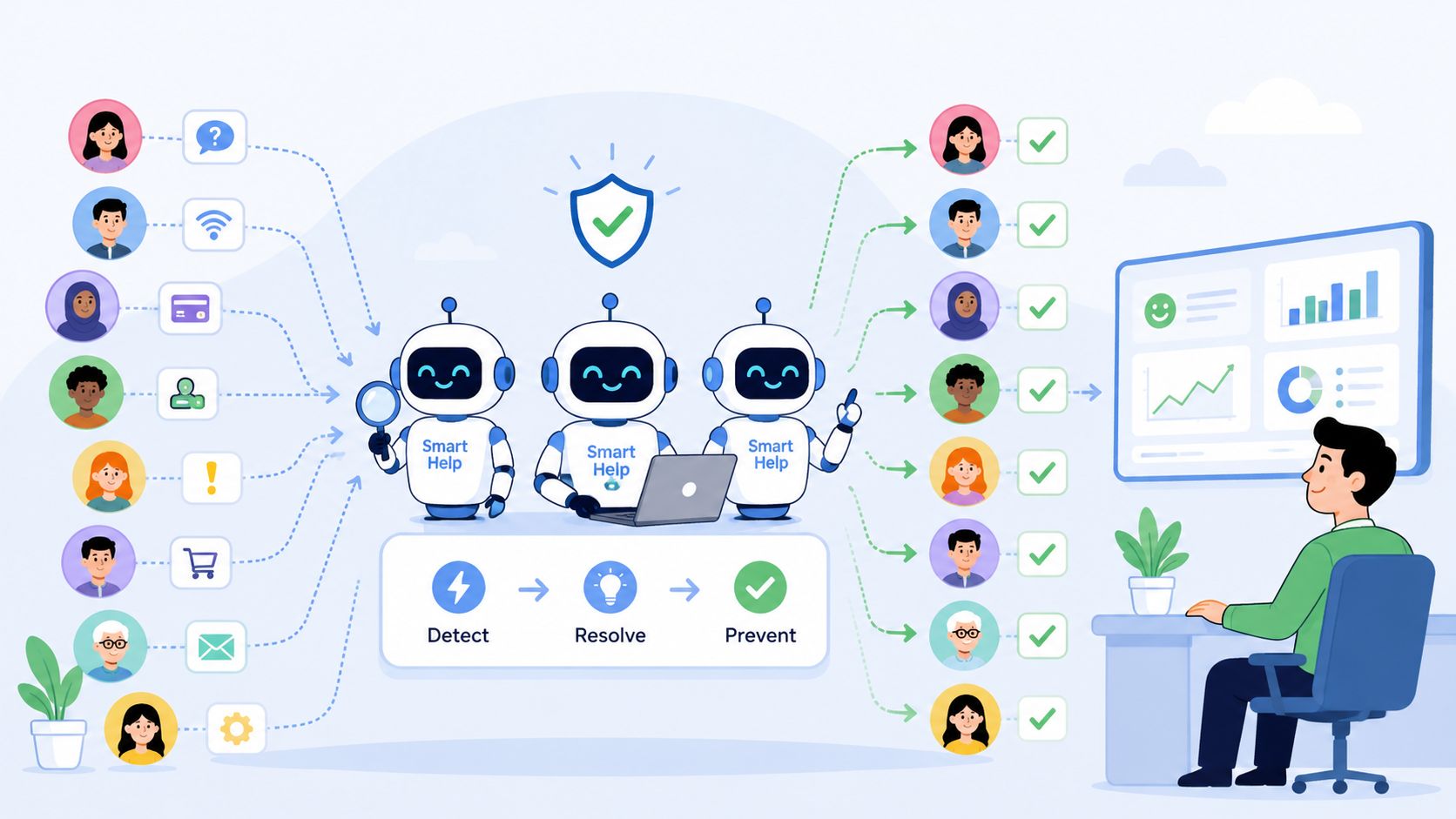
Retention often breaks down due to support friction, even with high customer engagement. Retention improves not with more contact, but when organizations reduce repetitive tickets and resolve issues faster, as noted in Global Response's guidance on contact centers and retention.
That point matters in Discord, Slack, and Telegram because high message volume can create the illusion of healthy engagement. It isn't healthy if customers keep asking the same question and still don't get unstuck.
Many teams try to solve community support by adding more people to more channels. That helps briefly, then breaks under volume. More humans in more threads often creates more inconsistency, not better coverage.
A stronger support architecture usually has three layers:
When support is split across Discord, Telegram, email, and web chat, context gets lost fast. The customer repeats the issue. One moderator handles the public thread, another answers the private message, and no one owns the final resolution.
A shared inbox fixes that operational problem. Tools in this category let teams route, assign, tag, and track conversations across channels instead of treating each platform as a separate support island. That's one reason some teams use automated customer support workflows or platforms such as Intercom, Zendesk, Front, or Mava to keep context intact across public and private conversations.
AI is useful in retention when it handles the questions that don't need human judgment. Setup steps. Password resets. Verification issues. Role assignment questions. Documentation lookups. Known issue explanations.
That frees human agents and moderators to focus on the tickets that influence trust:
The best use of AI in support isn't replacing human conversations. It's protecting human attention for the moments that decide whether a customer stays.
Automation breaks when the knowledge base is outdated. AI answers drift. Moderators improvise. Customers get conflicting guidance.
The fix is less glamorous than many groups want. One maintained knowledge source. Clear ownership. Tight article structure. Fast updates after product changes. Public answers that match private answers.
A good knowledge base should support both self-serve behavior and agent efficiency. If a user can solve the issue alone, great. If not, the human agent should still use the same source to respond consistently.
A short demo helps make the workflow concrete:
The most practical retention automations are not flashy. They're timely.
Examples include:
This is how to improve customer retention at scale in conversational products. Not by sending more messages, but by removing the friction that causes customers to lose confidence in the first place.
Once a user starts drifting, weak outreach makes the problem worse. The classic example is the generic win-back email with a discount and no understanding of what went wrong. It signals that the company noticed inactivity, but not the reason behind it.
That approach can recover a few customers in the short term, but it often trains the wrong behavior. Users learn that disengagement triggers incentives, while the underlying retention issue stays untouched.
Customers respond better to outreach that reflects their behavior and context, not blanket incentives. The better path is often reducing friction and intervening early for at-risk users, as described in Zoom's retention strategy guidance.
That's especially true in community-led products, where support teams often see the warning signs first. A user doesn't need a coupon after repeated integration confusion. They need a fix, a walkthrough, or a human follow-up tied to the specific problem.
A simple comparison makes the difference clear:
Re-engagement approachWhat it looks likeLikely resultGeneric discount blast“We miss you. Here's an offer.”Short-term response, weak insight, low trust recoveryBlanket product update emailSame release note to all inactive usersEasy to send, low relevanceBehavior-triggered guideHelp tied to the feature or workflow the user abandonedBetter fit because it solves a real blockerSupport-led follow-upOutreach after repeated questions or unresolved frictionStronger trust recovery because it acknowledges contextCommunity reactivation promptInvite to a relevant discussion, event, or channel based on prior activityMore natural for community-first products
When teams want a practical order of operations, a comparative view helps more than a long list of tactics. The following initiatives use the verified impact and timing available in the source material.
InitiativeRetention ImpactImplementation TimeProactive customer success outreach+14%6-9 monthsOnboarding optimization+10%3-6 monthsQuarterly business reviews+11%Qualitative timeline not specifiedMulti-channel support+7%Qualitative timeline not specifiedCommunity buildingEngaged members showed 31% higher retention than non-participants12-18 months
These figures come from Focus Digital's retention benchmark report, which also noted findings from 312 companies that improved retention over time.
Useful re-engagement usually starts with a narrow trigger and a specific response.
Examples that work better than generic campaigns:
The key trade-off is restraint. Not every inactive customer needs outreach. Some need a product fix. Some need cleaner onboarding. Some are not a fit. Smart re-engagement works because it respects that difference.
Retention becomes durable when support, product, and community operations feed each other instead of working in separate loops. Every unresolved ticket, repeated question, and successful intervention should improve the system for the next customer.
That's the flywheel. Support surfaces friction. Product fixes root causes. Documentation gets sharper. Automation improves. Customers reach value faster. Support volume becomes more useful instead of more chaotic.
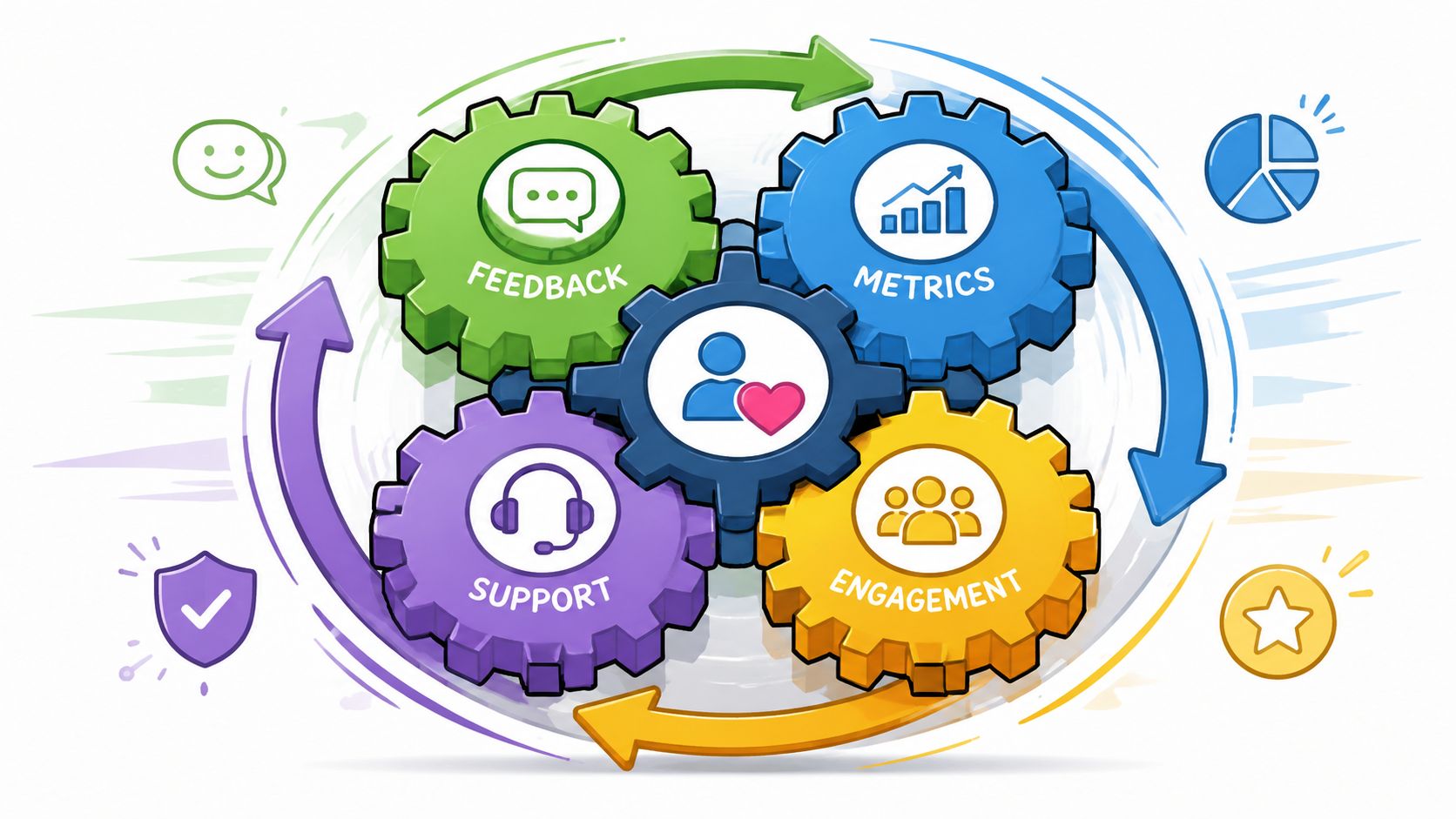
Too many teams collect feedback and stop there. They run surveys, tag conversations, and discuss churn themes, but nothing consistently changes downstream.
A healthier rhythm looks like this:
A retention system gets stronger when the same problem becomes easier to solve every week.
Lagging metrics still matter. Retention rate and churn rate tell the business whether it's winning or losing. But operators in high-volume channels need leading indicators they can influence daily.
Useful metrics often include:
Different teams will weight these differently, but the pattern is consistent. Good retention management combines customer sentiment, support efficiency, and product adoption in one operating view.
Cross-functional ownership sounds good until no one owns execution. Someone should be accountable for the retention process itself. In many companies that's a Head of Community, Customer Success lead, Support leader, or an operations owner working across those teams.
That owner doesn't “own retention” alone. They own the workflow that keeps it improving.
That's the practical answer to how to improve customer retention. Fix onboarding. Segment behavioral risk. Reduce support friction. Use AI carefully. Re-engage with context. Then keep feeding what the team learns back into the product and support system until retention stops being reactive.
For teams supporting customers across Discord, Telegram, Slack, and the web, Mava fits directly into that workflow. It gives support and community teams a shared inbox for public and private conversations, AI agents for repetitive questions, analytics for response and satisfaction trends, and a cleaner path from messy channel activity to consistent resolution.
.png)
.png)
.png)
